

Wisconsin coverage, local care

Pet insurance for a Madison household

Connect the Wisconsin policy offered to you with the clinics, referral routes and payment arrangements you would actually use.

Owner reviewing a document at home beside a golden-colored dog
✓ Policy-first ✓ Independent ✓ Useful checks
Direct answer
In Madison, start with a policy available at your Wisconsin address, then check how it handles your chosen veterinary care. A nearby veterinary hospital and an insurer’s state availability are separate facts; neither proves the hospital will bill that insurer directly.
Compare

The address check comes before the feature comparison

Enter your real Madison residence when requesting quotes, and keep the insurer’s Wisconsin documents with the price. Ask which animal ages and species can enroll and whether the add-ons you want are actually on that offer. A national product description can cover versions that are not sold in your state.

Use the same pet and deductible settings when comparing providers. If you change reimbursement or limits to fit the monthly budget, record the change; otherwise the cheaper number can conceal a different product.

A Wisconsin state listing is a useful first screen, not evidence that a particular existing condition qualifies. Have the insurer address any relevant medical history and keep the written explanation with the quote.

Quotes

Map routine, referral and emergency care separately

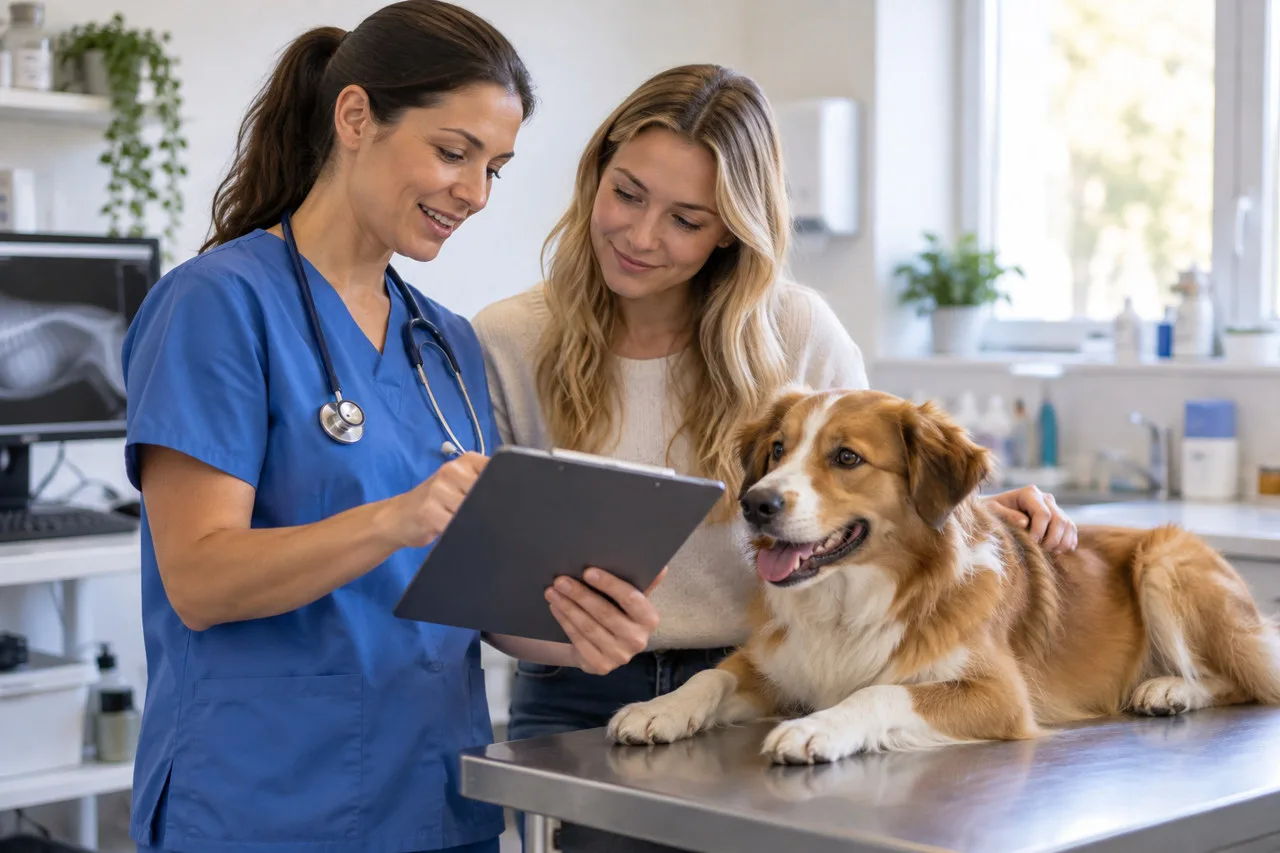
Veterinarian discussing a tablet with a dog owner
A referral conversation should include the estimate, records and payment process.

Write down your regular clinic, the referral hospital your veterinarian would use, and the emergency service you would contact outside normal hours. The University of Wisconsin’s official veterinary diagnostic laboratory page directs animal emergencies to UW Veterinary Care’s 24/7 emergency services. Confirm the appropriate route with the hospital when care is needed; this guide does not establish current capacity.

For a planned referral, request an estimate and ask how records will move from the regular clinic to the specialist. Then ask your insurer about the actual services on that estimate, including consultation fees. Do not assume a referral makes the entire visit eligible.

If your pet is unwell now, contact veterinary care first. Checking a future policy cannot replace an urgent assessment or retrospectively insure earlier symptoms.

FAQ

Ask the clinic and the insurer different questions

Ask the clinic Ask the insurer
What deposit or payment is due, and when? When can I submit the claim and what evidence is needed?
Can you provide an itemized estimate and clinical notes? Which proposed charges need a separate benefit or are excluded?
Do you participate in the specific direct-payment arrangement? Is direct payment available for this clinic and eligible claim?
Who sends referral and follow-up records? Does the claim require earlier records from other providers?

UW Veterinary Care maintains its own invoice-payment portal. The existence of that portal does not establish an insurance network or direct-billing agreement. Likewise, a clinic saying it helps with insurance paperwork is different from agreeing to wait for insurance payment.

Keep enough flexibility for any required deposit. Even a potentially covered expense can create a short-term cash need while documents are reviewed.

Claims

Four documents worth saving before the first claim

  1. The offer and declarations: identify the pet, address, effective time and selected coverage.
  2. The Wisconsin policy and endorsements: use these to verify waiting rules, exclusions and optional benefits.
  3. The veterinary history: retain records from previous homes or clinics, including dates and findings.
  4. The cost-sharing explanation: ask for a sample calculation showing the deductible and reimbursement method.

For a recent move to Madison, do not assume changing the address and replacing the policy have identical effects. Ask the existing insurer what can continue and how the move changes price or terms. If considering replacement, compare the new start and prior-condition rules before ending the old coverage.

Claims

A Wisconsin route when a claim dispute stalls

The Wisconsin Office of the Commissioner of Insurance recommends first asking the insurer to resolve the problem and keeping correspondence. Identify the exact company shown on your policy, the disputed claim and the provision you think applies.

If that does not resolve the issue, OCI provides an insurance complaint process. It can review whether the company followed applicable law and the policy, but it does not serve as your lawyer or guarantee a payment. Follow its current instructions and consider the public-record notice before sending documents.

For a routine clarification, a focused question is easier to answer than a complaint about the whole policy: name the disputed service, decision date and missing explanation. Retain the response so the next conversation starts from the same facts.

Evidence

Sources and policy context

These public references support the consumer or veterinary context. Named insurer details were checked in official product materials; the policy offered for your pet and state determines the actual terms.

Next step

Compare Current Pet Insurance Rates

Check current options for your pet and location, then compare the policy details, exclusions, costs, and eligibility before choosing.

Compare the policy before you choose Check the actual offer, exclusions and out-of-pocket terms.
See Rate Options